How designing my daughter’s bat mitzvah lunch changed the way I think about every gathering I plan
Stop Leaving Connection to Chance
Picture the typical networking reception. The noise level is high, the wine is flowing, people are standing in clusters engaged in small talk. A few are in their element, mingling easily. Most however are scanning for a friendly face, hovering at the edge of a group they can't quite break into, or quietly counting the minutes until they can leave.
We've all been at these gatherings. Many of us have planned them.
The Schmooze Default
Too many events are built on the assumption that putting people in a room with a drink in hand or a nice buffet will produce connection. This will always work for a few people, but if you want everyone to feel engaged and seen, to make meaningful connections with each other, then you have to design for that.
There's nothing wrong with unstructured socializing. The trouble is treating it as the default answer to every gathering, regardless of what you're actually trying to achieve. Open mingling works beautifully once a group already has shared history and real relationships to build on, but drop strangers into an open room expecting bonding to happen organically and you mostly get people waiting for it to be over.
In her book The Art of Gathering, Priya Parker makes the case that most gatherings fail not because of poor logistics, but because of a lack of real purpose. We plan the way we've always planned, for the people we've always planned for, without stopping to ask: what do we actually want people to experience and walk away with?
I'd been steeping myself in this approach for years before I realized I was ignoring my own advice in planning my daughter's bat mitzvah lunch.
More Than Just Lunch
At our synagogue, b’nai mitzvah lunches follow a predictable formula: guests drift from the sanctuary to the social hall, wander toward the buffet, and find a seat near people they already know. The cousins from New Jersey sit with the cousins from New Jersey. Those without a group sit quietly or try to make conversation with strangers at their table. It's perfectly nice. It's just lunch.
But I kept thinking: what if we actually designed for a deeper, more joyful experience?
My daughter Leah had decided to forgo a big party in favor of a family trip, so we were planning a simple post-service lunch. We talked at length about what we wanted people to experience at this lunch, and here's what we landed on: everyone attending would bring their own moment of joy as a gift to Leah, and connect with each other around those moments. Everyone would leave having learned something real about someone they didn't know, or something new about someone they did.
Once we had that intention, the design followed. Borrowing from a Christmas party described by Priya in The Art of Gathering, we asked every guest in advance to send one to three digital photos of a joyful moment in their lives. It took some reminding, but eventually the photos started arriving: family vacations, an empty hammock at sunset, photos of loved ones they'd lost.
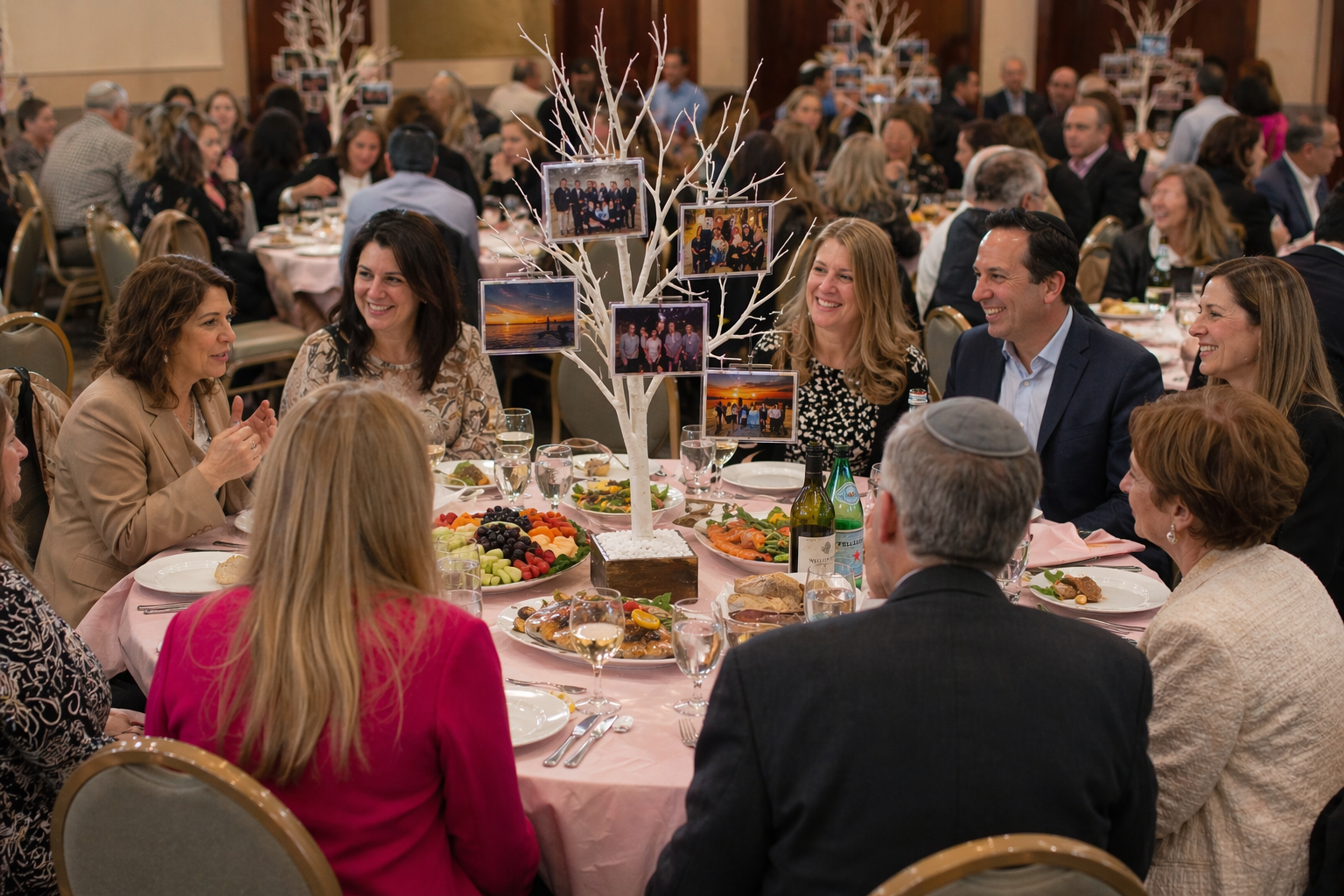
Then we made a series of deliberate choices. We eliminated the buffet and served lunch family-style, so people would pass food to each other from the moment they sat down. We assigned seating, mixing people who knew each other with those who didn't at each table. And at the center of each table was a small photo tree hung with printed photos from every guest seated there.
Then we watched the joy unfold.
People passed platters and spun the photo trees, pointing at pictures and telling stories. Acquaintances learned new things about each other they’d never known, while people who had never met found something real to connect over almost immediately.
Afterward, a friend pulled me aside — a single, younger woman without kids — and told me she usually leaves immediately after services because she doesn't fit into the social landscape of these events. "You literally gave me a seat at the table," she said. "I learned surprising things about people, and instead of feeling different, I realized how much we all have in common."
It was just lunch. And yet with clear intentions and a few creative design choices, we turned a mundane event into a space for deeply meaningful connection.
A Habit of Intention
In Jewish tradition, we have a word for bringing deliberate purpose to an act rather than going through the motions: Kavanah. It’s the difference between hosting a cookie-cutter event, and intentionally designing for a more meaningful, connective experience.
Whether you're planning a staff retreat, a volunteer orientation, a conference opening, or a community dinner, start with Kavanah. Ask: Who are you designing for? What do you want people to feel and do at the gathering and after when they leave? And what specific choices in the room set-up, the seating, the food, the program will give everyone a genuine shot at connection?
Once you start asking these questions, you can’t help but view every event you attend through those lenses. You notice who's left out, who the event was really built for, the missed opportunities to go deeper. And you discover how much more is possible when you treat every gathering as a chance to design belonging, not just fill a room.
Are you thinking about how you design the gatherings in your community or organization? I'd love to hear what you're working on, or what's not working. Reply here, or reach out directly. I’m happy to send you my Guide to Events and Meetings. And if this resonates with someone you know, please pass it along.