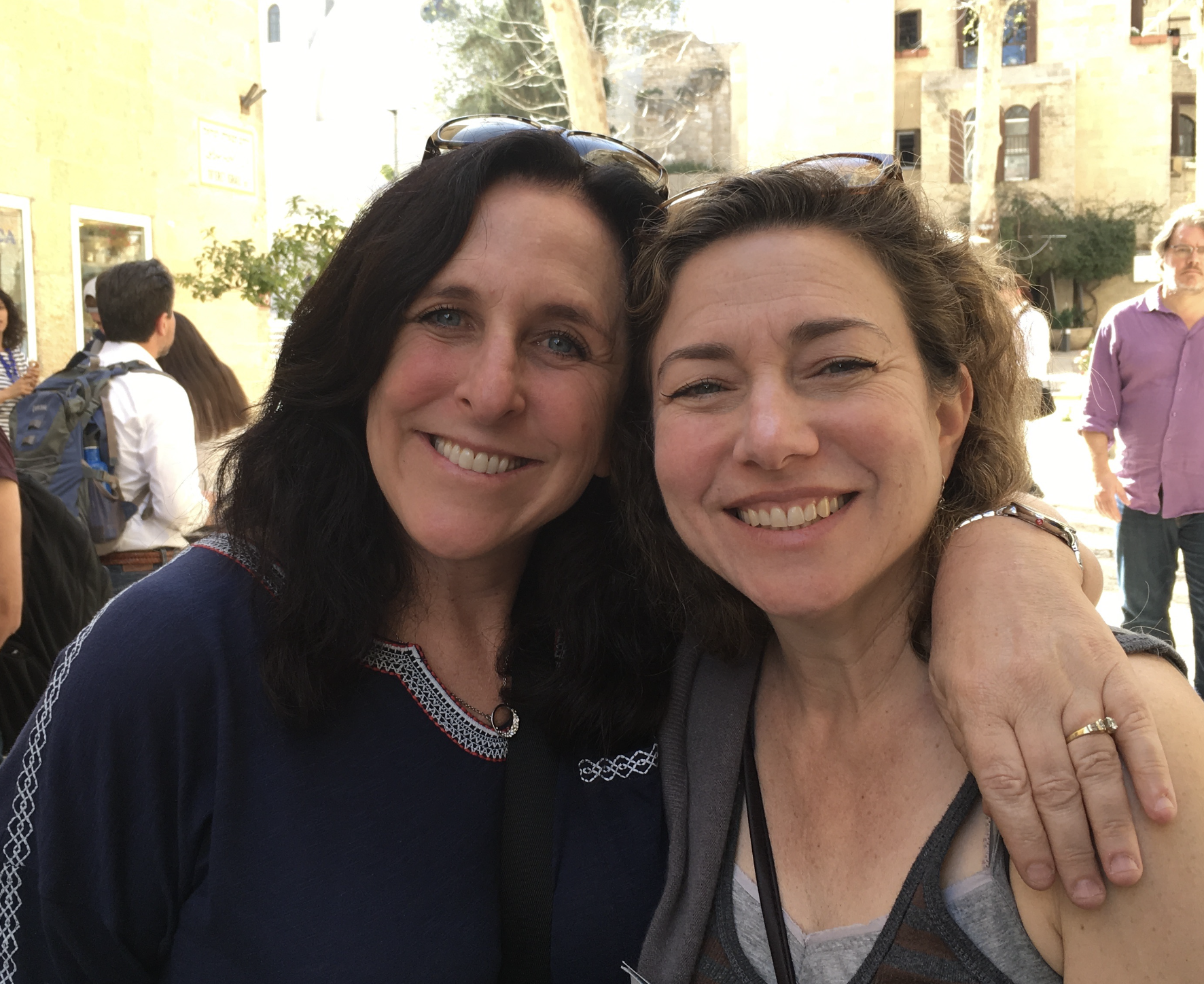
Where it all began: Wendy and Julie in Israel together - our first taste of the community-building model we've adapted for Belonging by Design.
Julie Golde, senior consultant at Belonging by Design, shares this story about a grassroots democracy group she advises that built belonging to fuel a movement.
This story beautifully illustrates the power of asset mapping and building on people’s gifts and talents rather than their “needs,” (or YOUR needs!). Instead of assigning tasks on a sign-up sheet, you take the time to discover what people are genuinely good at, what they care about, and what they want to contribute. Then you invite them in accordingly. What happens next is pure magic!
— Wendy
By Julie Golde, senior consultant, Belonging by Design
The small leadership team of a pro-democracy grassroots group I advise was both exhilarated and exhausted. The year had been non-stop organizing, educating, planning and taking action. And now, as their significant fundraising goal loomed, the idea of pulling off a full-blown event felt daunting.
They were tired. The team weighed their options: postpone the event? Raise the funds quietly from a few large donors and skip the event altogether?
The group had been incorporating elements of the Culture of Belonging framework into their regular gatherings for months, and it was working. People were coming to the meetings and they were returning, bringing new friends. Each meeting started with small group connection, often in pairs, around a meaningful question tied to the group's shared purpose: Who had inspired them? Who were their role models? What was bringing them joy in the hardest of times? Now at each group gathering, not only did they have an educational goal and an action goal, they had a belonging goal too.
Taking the Plunge
The leadership team knew about asset-mapping — a structure for discovering the unique gifts, talents, and skills of each person in a group so that everyone is known more fully and can be invited to contribute according to their strengths — but had yet to try it with their growing community.
What if they didn't have to plan and execute this event alone? What if, building on the connection and shared purpose already taking root, they could invite their group to co-own it? Not delegating tasks through sign-up sheets and endless follow-up emails, but genuinely inviting people to lead based on who they are..
So at their next meeting, they took the plunge. They shared the goals of the upcoming event: generate buzz, expand the community, increase group ownership, and raise $60,000. Then they asked participants to write down their talents and skills on sticky notes (with their names), and assembled them into a collective map of the group’s assets on the wall. Together, the group clustered assets into categories, noted strengths, surprises and gaps, and talked about how to make use of all these assets in their work together.
At the end of the meeting, people joined small teams organized around different areas: content (speakers and entertainment), logistics, food, and welcome and connection. Each person joined the team that fit their expertise, networks, and interests.
It took off from there. The leadership team still had a lot to oversee, but what a difference it was to have teams of people contributing their own ideas, inviting their friends to get involved, and feeling that the event belonged to everyone. It was messy in the best possible way. The energy leading up to the event was palpable, not draining.
The Day Of
The day of the event, they exceeded their expectations in every way. All the volunteers arrived early to do a final run-through of the flow and responsibilities, which were now shared among over 40 people. It was a sellout, with not enough chairs. Many guests were brand new to the cause. One volunteer had created an action wall during the arrival time where people could post the advocacy efforts they'd been doing in their communities all year. A team of chefs and servers, all volunteers, passed homemade hors d'oeuvres and desserts. And, they met their fundraising goal.
But more importantly, the event was an opportunity for people to co-own and co-create an event that would become part of their larger movement. The small leadership team felt so much pride and began planning for how they would follow up with their volunteers to keep the involvement and co-ownership going and growing. When people help build something, they don’t want to stop.
An Invitation
Ready to try asset-mapping with your own group? We've put together a simple guide that walks you through the exercise step by step. It works for teams, volunteer groups, boards — any group where you want people to show up more fully.
Are you seeing belonging gaps in your own community? We’d love to connect. Reply here or reach out to start a conversation. And if this resonates, feel free to share it with others who might benefit.