
From Isolation to Action: How Belonging Fuels Impact
Practicing What I Teach
For many years I’ve been teaching leaders how to build cohesive, effective groups that bring out the best of their people.
And yet I’m always amazed and delighted when I practice what I teach with my own groups and get to see the magic unfold, reminding me, “wow, this stuff really works!”
In early 2025, I wasn’t thinking about group belonging at all when I raised my hand to co-lead an action team for my local Indivisible chapter (a pro-democracy movement).
I was feeling scared, isolated and depressed about the 2024 election results and the shifts our country was rapidly taking, and I decided that the best way to manage my own anxiety was to help protect people who might be harmed by new policies.
Where Could I Make an Impact?
My county in California has the second highest concentration of immigrants in the state, and my husband and I are both steeped in our own beloved family immigrant stories - just a generation or two removed. So it made sense for me to volunteer to promote immigrant rights.
The next thing I knew I was sitting in a living room with 10 strangers, trying to figure out how we might make a difference together.
The first thing I did was simply ask the question “why are you here?” And as each person shared their own stories, we discovered we had a few things in common:
We cared about treating all humans with kindness and dignity.
We felt alone and powerless as individuals.
We were incredibly relieved to find one another. In fact, there were tears of relief at that first meeting.
Our Collective Action
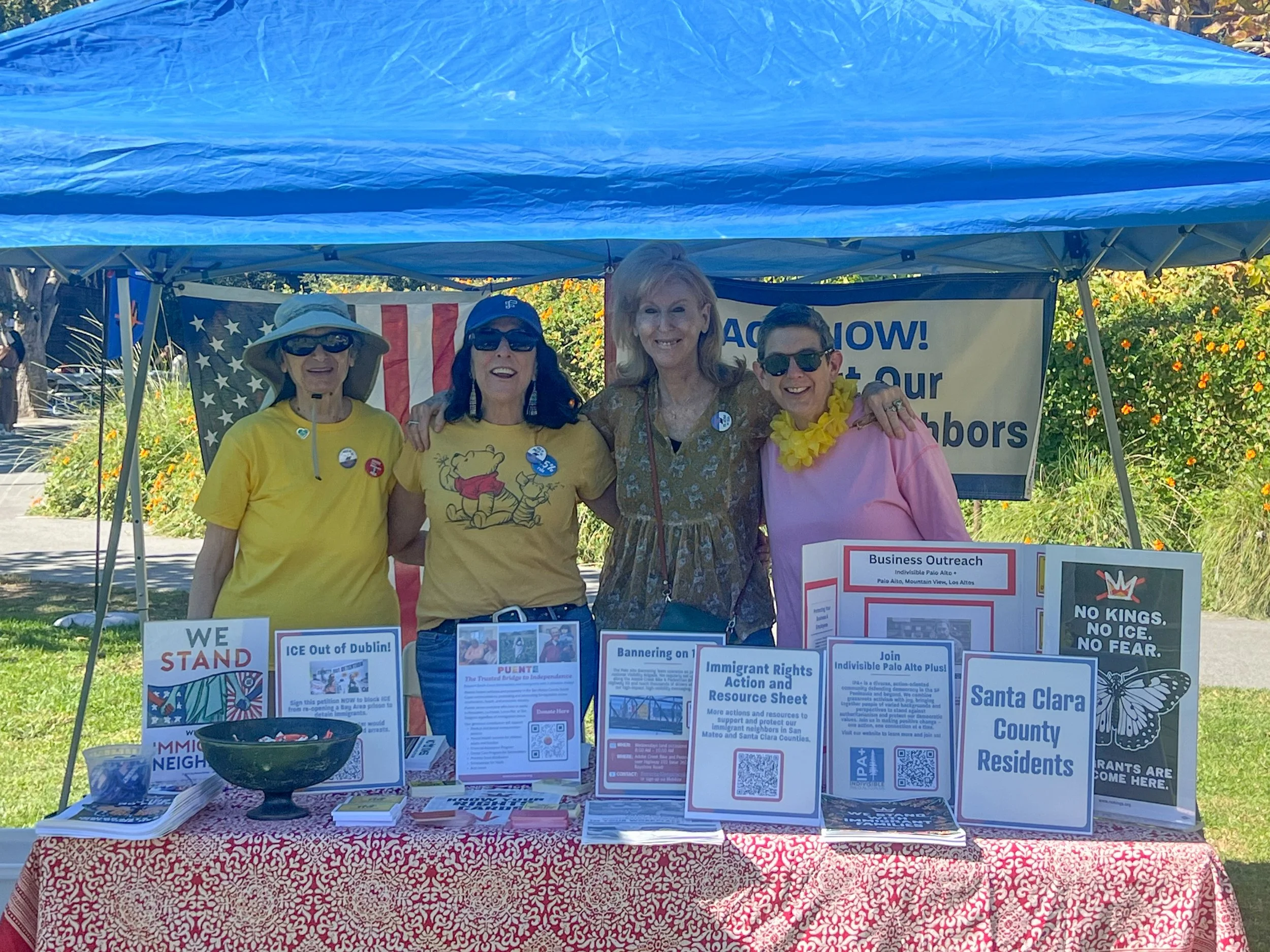
Encouraged by this shared purpose, we began working on projects together: staffing information tables at protests, fundraising for immigrant families, collaborating with local nonprofits, advocating to government officials, canvassing businesses, distributing know-your-rights cards, and more.
In each case, we invited our members to contribute in specific ways, according to their talents and interests. One woman with an artistic bent made all our signs and banners, our extroverts staffed the info tables, a retired professor developed a resource guide for local businesses, and a community activist launched an initiative to meet with local police chiefs to discuss immigrant rights.
Within a few months, we had grown to over 50 members, with nearly half actively participating in one of four team initiatives, and raised $18,000 to support local immigrant families in need. Working side by side, we’ve gotten to know each other and build camaraderie. We hug when we see each other in the community, and our meetings are lively and hopeful now, a far cry from the despondent group of strangers who came together last April.
In the new year, my co-chair and I are reaching out to all 50+ of our members one by one to learn more about their interests and skills, find out how they want to contribute, and elevate some into leadership roles so the work isn’t all on our shoulders. At some point when we get tired, and need to step down or take up other roles, we’ll know there are capable, enthusiastic peers ready to step up to lead.
Belonging Principles
None of this, of course, has happened by accident. I’m guided by the same Culture of Belonging principles that I teach to clients:
Intention: We have clear goals for our team culture and how we want people to participate. We wanted team members to feel like they matter, to feel valued for their contributions and be part of something bigger. And we wanted people to get active and initiate their own ideas.
Common purpose: at each meeting or activity, we connect around our shared passion for this work, and our desire to make a difference.
Face to face: we make time for in-person meetings and activities and use those as opportunities to build group cohesion and relationships, in between the emails and Zoom calls.
Sharing: We structure in time and prompts for people to offer glimpses of their authentic selves, motivations, experiences. Not everyone loves taking the time to go around a circle and share, but even the introverts appreciate how this practice brings people together.
Ownership: We are laser-focused on the assets each team member brings and we invite them to contribute based on what they are uniquely able to give. As a result, many of our members feel invested in this team, they care about what we are doing and they act like owners, not customers.
This volunteer leadership role has reminded me that culture of belonging practices aren't just about supporting individuals, they are also the key to activating effective groups and making an impact together.
If this resonates with you, I encourage you to reflect on how your groups, and the causes you care about, may be strengthened by belonging. You can learn more, reach out, or share this newsletter with the people in your community.